
Cashflow Management During a Growth Phase: Why Profit Doesn’t Always Mean Cash in the Bank
Many business owners assume that if their business is profitable, the bank account should also be growing.
Unfortunately, that’s not always the case.
One of the most common challenges we see with growing businesses is the disconnect between profit and cashflow. A business may be performing well on paper, yet still experience cash shortages.
Understanding the difference between profit and cashflow is critical for managing a business during a growth phase.
Profit vs Cashflow – What’s the Difference?
Although they are often used interchangeably, profit and cashflow measure two very different things.
Profit is what remains after your income minus expenses according to your Profit & Loss statement.
Cashflow is the actual movement of money in and out of your bank account.
A business can report strong profits but still struggle with cashflow because not all revenue and expenses happen in cash at the same time.
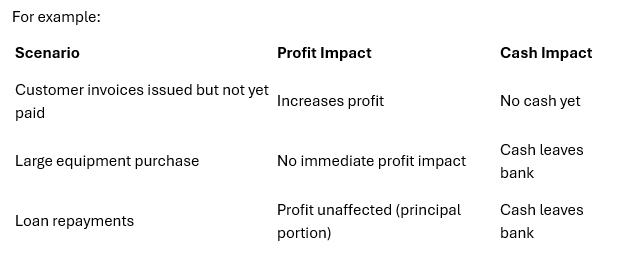
This difference becomes even more significant during periods of rapid growth.
Why Cashflow Pressure Happens During Growth
Growth is exciting, but it often requires more cash before the profit arrives.
When a business expands, it commonly experiences:
1. More money tied up in debtors
As sales increase, the amount owed by customers (accounts receivable) also increases.
If clients take 30–60 days to pay invoices, the business may be funding that growth itself.
2. Higher upfront costs
Growth often requires investment in:
New staff
Inventory
Equipment
Marketing
Technology
These costs are usually paid before the revenue is received.
3. Increased tax obligations
Higher profits also mean:
Higher income tax
Larger PAYG instalments
Potential GST liabilities
Many businesses fail to set aside funds for these obligations, creating further pressure on cashflow.
The Most Common Cashflow Mistake
The biggest mistake we see is business owners spending based on profit instead of available cash.
For example, a business owner may see that their business made $200,000 profit and assume that money is available to spend.
However, that profit may already be tied up in:
unpaid invoices
inventory purchases
tax obligations
loan repayments
This is why a business can look highly profitable but still experience cashflow stress.
Strategies to Manage Cashflow During Growth
The good news is that there are practical strategies that can help businesses stay ahead of cashflow challenges.
1. Track cashflow separately from profit
Your Profit & Loss statement tells you how profitable the business is.
A cashflow forecast tells you whether the business can meet its obligations.
Both reports are important, but they serve different purposes.
2. Improve debtor management
Getting paid faster can significantly improve cashflow.
Consider:
Shortening payment terms
Requiring deposits
Sending invoices immediately
Using automated payment systems (such as Stripe or GoCardless)
Even reducing payment times by 10–15 days can dramatically improve cashflow.
3. Set aside tax regularly
Tax obligations can catch businesses by surprise.
A common strategy is to transfer a percentage of revenue into a separate tax savings account each month to cover:
GST
PAYG withholding
income tax
This prevents tax bills from impacting working capital.
4. Monitor growth sustainably
Rapid growth can sometimes create more pressure than stability.
Before expanding, consider:
Do we have enough cash to fund growth?
What happens if customers take longer to pay?
Do we have sufficient working capital?
Planning ahead can prevent a profitable business from running into financial strain.
The Key Takeaway
Growth is a positive sign that a business is succeeding, but it also brings new financial challenges.
Understanding the difference between profit and cashflow allows business owners to make better decisions and ensure the business has the cash it needs to continue growing.
With proper planning, forecasting, and financial management, businesses can turn growth into sustainable long-term success.
Need help managing your business cashflow?
If you’d like assistance reviewing your numbers or preparing a cashflow forecast, feel free to reach out to our team.
Disclaimer
This blog provides general information only and does not take into account your personal circumstances. It should not be relied upon as professional or tax advice. We recommend seeking independent advice tailored to your specific situation before acting on any of the information provided.